“Do not be afraid to be saints. Follow Jesus Christ who is the source of freedom and light.”
Pope St. John Paul II
Pope St. John Paul II
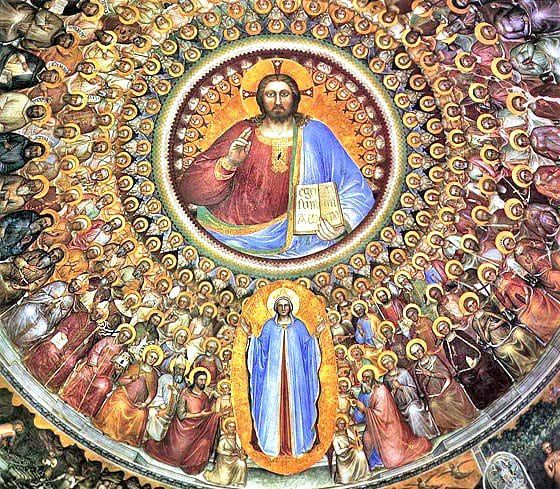
Every year on November 1, the Catholic Church celebrates the Solemnity of All Saints. We honor the great saints whose names are familiar to us: St. Catherine of Siena, St. Peter, St. Augustine, St. Francis of Assisi, St. Thérèse of Lisieux, and others. But we also celebrate the millions of unknown saints, ordinary men and women who lived lives of quiet holiness and now enjoy the glory of Heaven.
You might ask the question, what is it that makes someone a saint? Is it extraordinary virtue or heroic sacrifice? Is it a lifetime of prayer and good works?
Certainly, these things can be strong signs of sanctity. But I would suggest that something more simple lies at the heart of sainthood. A saint is someone in whom God recognizes the image of his Son.
To understand this, we need to return to the very beginning of our Christian lives: the Sacrament of Baptism. At baptism, we were cleansed of original sin and incorporated into the mystical Body of Christ. Through sanctifying grace, we became adopted children of God, sharing in the divine life of the Blessed Trinity.
St. Paul expresses this beautifully in his Letter to the Romans: "For those he foreknew he also predestined to be conformed to the image of his Son" (Romans 8:29). Notice what St. Paul is telling us. God's plan is not simply that we become better people. His plan is that we become like Jesus Christ himself and that transformation begins at Baptism.
But Baptism is only the beginning. Throughout our lives, God continues the work of transforming us into the likeness of his Son. Every act of charity, every moment of forgiveness, every act of devotion to the sacrifice of the Holy Eucharist, allows the image of Christ to become more clearly visible within us.
Conversely, every time we surrender to selfishness, pride, or other sins, we obscure that image. Sin does not erase our dignity as a people made in God's image, but it wounds our relationship with Him and impedes the work of grace within us.
The great saints understood this. St. Francis of Assisi did not become a saint simply because he embraced poverty. He became a saint because his poverty reflected the humility of Christ. St. Thérèse did not become a saint because she performed extraordinary deeds. Rather, she became a saint because her little acts of love reflected the heart of Jesus.
St. Athanasius famously taught, "For the Son of God became man so that we might become God." Of course, this does not mean that we become divine by nature. Rather, through our union with Christ, we are invited to share in the life and love of God himself. And that brings us to the feast of All Saints.
In his First Letter, St. John writes: "We do know that when it is revealed we shall be like him, for we shall see him as he is" (1 John 3:2). The destiny of every Christian is to be transformed so completely by God's grace that we become perfectly conformed to Jesus Christ. This is what the saints have attained. The work begun in Baptism ultimately reaches its fulfillment in Heaven.
And maybe that is the most important lesson of All Saints Day. We are not simply celebrating what God accomplished in the lives of other people. We are celebrating what God desires to accomplish in each one of us.
One day, each of us will stand before the judgement seat of Christ. And when that moment comes, what matters most will not be how much wealth we accumulated, or how successful we became, or how many people admired us. What’s most important is how faithfully we allowed His grace to transform our lives. Because ultimately, the purpose of the Christian life is this: that when God looks upon us, He sees the image of His beloved Son.
Through the intercession of the Blessed Virgin Mary, Queen of the Saints, may we continue to allow grace to transform our hearts into the likeness of her Son, so we too may join the great communion of saints in the glory of Heaven.